Friday, 17 April 2009

home recycling - something everyone could do!

Random facts on how much home recycling could contribute -

image from http://www.flickr.com/photos/simonandhayley

Every ton of recycled paper saves 17 12-metre Douglas Fir trees.
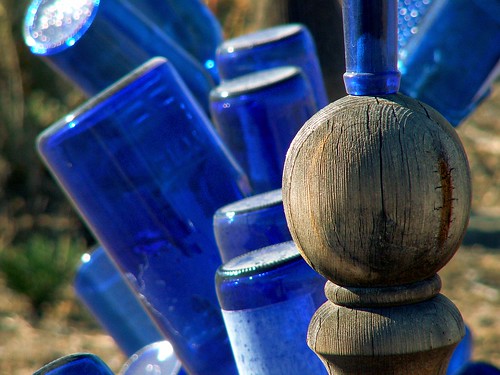
image from http://www.flickr.com/photos/cobalt/

Up to 90% of recycled glass can be reused to make new glass items, such as bottles and jars.

Every glass bottle recycled saves enough energy for a 100 watt light bulb to be lit for 4 hours.

image from http://www.flickr.com/photos/sblackley/

Recycling one aluminum can saves enough energy to run your TV for 3 hours.

43 recycled bottles can make 1 m2 of carpet.

Recycling a 1-gallon (3.79L) plastic milk jug will save enough energy to keep a 100-watt bulb burning for 11 hours.

Tips on recycling various home waste materials -

paper & cardboard
- newspapers should be saved in its own bin, as this material goes directly back into newsprint recycling. Recycling a 1.2m stack of newspapers saves the equivalent of one 12-metre fir tree.
- magazines, glossy printed flyers or newspaper inserts, phone books, envelopes, computer paper, old letters, and paper packaging can be saved together in one bin.
- Staples in paper are acceptable, but remove rubber bands or plastic wrap.
- Do not include the following in your paper recycling: carbon paper, stickers, cardboard, laminated paper, laminated cardboard.
- plastic-lined paper drink cartons are recyclable. Most recycling centers now accept these items; ask locally.
- Discard fast food wrappers made from plastic, dirty or food-stained paper tissues or napkins.
- corrugated cardboard is a highly valued recyclable. Most curbside collectors ask you to bale the cardboard together and tie it with string. Check to see if there are size and weight limits to how much you are allowed to bale together. The most important thing to remember is to keep it dry. Plastic or waxy coated, and wet or greasy cardboard, such as pizza boxes, cannot be recycled because it clogs sorting machines.

plastics
- plastic goods are assigned different numbers to grade them for recycling:
#1 (PET) and #2 (HDPE) for containers, #4 (LDPE) for bags, #7 for mixed plastics that are not recyclable.
- plastic bottles are usually made of #1 PET plastic, a valuable recyclable material. Among many other items, this plastic can be "spun' into fleece fabric. Tops should be removed before recycling, and put in with your general plastic items.
- because it is difficult to clean PET plastic without releasing harmful chemicals, bottles made of PET should not be reused.
- plastic grocery bags - most grocery bags are made of high density polyethylene, a Type 2 recyclable plastic. Most grocery stores have bins outside so customers can drop off used plastic bags for recycling.
- polystyrene (#6) (cups, food trays, egg cartons, etc) is not biodegradable. Try reduce your use of this material.
- polypropylene (#5) is one of the least recyclable plastics. Considered one of the safest plastics, #5 plastic is used for packaging items such as yogurt, cottage cheese, margarine and vitamins, and is contained in food wraps and bottle tops. It is one of the least expensive plastics to make. However, the process of recycling plastic #5 is less efficient than other plastics, and the end result has little market value.
• Choose products packaged with plastic #2 (HDPE). Many companies, especially those selling organic food, have switched to plastic #2, a better (but more expensive) alternative.
• Find out if your community has an All Plastics Recycling program which accepts plastic #5.
• Set aside your plastic #5 containers for reuse.

glass
- glass is recycled according to color: clear, green and brown. If possible separated them this way.
- paper labels can be left on the glass.
- store lightbulbs, sheet glass, mirrors and pyrex separately from bottles, since they have a different composition.
- compact flourescent lightbulbs (CFLs) may be recycled at your local Ryness store.
aluminum, steel & copper
- food cans should be rinsed and have lids and labels removed. It helps if they are flattened, although many new cans are difficult to flatten; they should still be recycled.
- aluminum cans are very valuable as recyclable items. Do not crush aerosol cans.
- aluminum foil and foil packaging are also important to recycle; they are reprocessed into aluminum mechanical components, such as engine parts.
- paint cans, aerosol cans are recyclable, but are considered hazardous waste and need to be kept separate from other metals. It is important to leave labels on these cans, as recyclers need to know the former contents. Try to return the lids along with empty paint cans.
- copper is one of the most recycled and recyclable of metals. In fact, copper is 100% recyclable, as are all its alloys, such as bronze and brass. The recycling of copper requires only 15% of the total energy otherwise consumed in mining, milling, smelting and refining.

computers, printers and hardwares
- Pass it on. The simplest solution to recycling your old computer. Ask at a local school or put a notice on a community bulletin board offering your computer free for the taking. Many people without a computer will still find use with the word processor and basic programs.

rechargeable batteries
- Some high street electronics retailers collect (free of charge!), all old mobile batteries and used rechargeable batteries (as in electronic/electrical appliances) for recycling.
- In most boroughs you can take car batteries to a local Reuse and Recycling Centre. In some parts of London they can be collected as part of the kerbside collection.
- If you can’t recycle batteries, consider doing the following before you buy:
• Use mains electricity where possible
• Use rechargeable batteries and a battery charger. The energy needed to make batteries is 50 times greater than the energy they give out.
• Send batteries back to manufacturers, where such a scheme is available, or set up a scheme with your local supplier if possible

clothes & textile
- Many recycling banks are operated by charities, such as Oxfam and Scope and they empty the textile banks and sort the clothes and textiles. Wearable clothes and shoes are then distributed through their network of charity shops or sent overseas to those in need.
Those clothes and textiles that cannot be worn or used again can be sold for other uses such as for padding and stuffing in loudspeaker cones and furniture. Some are made into wiping cloths for industrial use and some woollen yarns and fibres can be reprocessed and made into fibre for new garments.
- Soiled/stained clothing or carpets cannot be recycled.
- Shoes can also be recycled. Some boroughs have recycling banks just for shoes - tie shoes up to keep them in pairs.
- As well as recycling unwanted clothing, don't forget to recycle other textiles such as towels, sheets, bedding and blankets, and even soft furnishings, like cushion covers.

Information from some of the following websites.
Some further readings -

recycle for london -
http://recycleforlondon.com

save the hussles at home and let tesco work for you (UK) -
http://www.mrw.co.uk/page.cfm/action=Archive/ArchiveID=10/EntryID=5277

how to set up a home recycling system (USA) -
http://www.wikihow.com/Set-Up-a-Home-Recycling-System

check with your local councils to see what could be recycled & how (UK) -
http://www.uk-energy-saving.com/local_recycling.html

Friday, 16 January 2009

revolution of AC/DC electricity to contribute for energy efficiency

eco home, from sharp

家電產品朝直流電發展 狄高
2009年1月6日 信報財經新聞

目前大部分家庭電器都使用 220V 交流電(AC),如電燈、冷氣機或雪櫃等。但我們日常使用的中、小型電器卻大多數使用直流電;例如電腦、LCD 電視、電話或影音器材等,都是使用火牛(即變壓器)把交流電轉換成直流電(DC)運作。有沒有想過既然很多電器都使用直流電,我們可以把全屋電制變成直流電接口,所有電器便毋須再用火牛,直接插到電制上使用便可以了。

效果更加環保

事實上,日本已有電器生產商朝這個方向發展,研製直流供電系統,直接向全家電器提供直流電。使用了直流供電系統後,電器便毋須再使用火牛,這既可簡化電器的設計,也可以提高電力轉換效率,更加省電環保。
我們使用直流電的電器規格並不統一,因此每件電器都要使用自己的火牛,才可變壓。例如室內無線電話多使用 3.6v 電壓、電腦使用 12v 及 5v,有些家電為配合筆芯電的 1.5v 電壓,因而使用 3v 或 9v,沒有統一標準。直流供電系統出現後,小電器的電壓多會跟隨電腦常用 12v 和 5v,跟電腦規格看齊。

適用於數據中心

當所有電器都使用 12v 和 5v 後,加上全屋使用直流供電,電器便毋須再使用內置變壓器或外置火牛了,可以直接接駁到直流電源上使用。直流供電系統將最先應用在數據中心,這可以令每台伺服器簡化,毋須再使用火牛,令每個機櫃可以安裝更多的伺服器,也減少了火牛發熱的問題。
此外,在目前數據中心的設備中,為確保電力不會中斷,數據中心必須使用 UPS 後備電源。UPS 可以在斷電時繼續提供 220V 交流電,令伺服器繼續運作。若整個數據中心改用直流供電,UPS 便只須提供 12v 直流電便可,設計上可簡單得多。
多年來,我們一直使用高電壓的交流電,是因為在輸電網上,高電壓可以減少電力損耗,但當電力進入家中後,由於現在大部分電子器材都使用低電壓直流電,如果能夠在室內預先把交流電轉成低電壓直流電,避免每件電器自行轉壓,轉換效率可以更高,因此直流供電系統將是一套極具潛力的環保電力系統。

AC/DC: Not just a rock band anymore . Junko Yoshida
02.10.2008 EETimes.com
http://www.eetimes.com/showArticle.jhtml?articleID=210605193

MAKUHARI, Japan — Sharp Corp. and TDK Corp. have revived the apparently never-ending DC vs. AC debate.

You'll recall that it started back when Thomas Edison promoted direct current power generation while Nikola Tesla invented a relatively simple AC induction motor and advocated a alternating current distribution system.

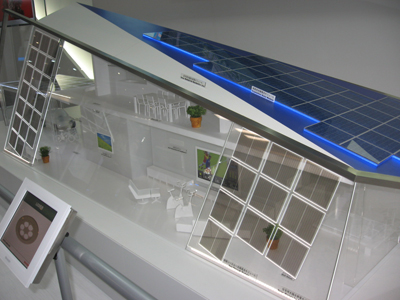
At the Ceatec Japan show here, Sharp showed what the company calls its "DC Eco House," a concept illustrating carbon-neutral living.

Sharp created a miniature house equipped with crystalline solar modules on its roof, generating power in DC, which can be directly distributed throughout the house to power up "the next-generation" refrigerator, air conditioner, LCD TVs and power LED lights, all featuring a DC input.

Similarly, TDK promoted a partly DC-powered "eco home," anticipating a combination of clean energies, such as solar and wind power, and conventional commercial electricity.

The TDK mock-up showed a flow of energy from multiple energy sources not only to the home but throughout the home, with Home Energy Management System installed inside the home.

Both companies are advocating foregoing multiple conversions of DC-to-AC and AC-to-DC. They believe such a step will prevent energy losses by up to "several percent."

They are asking: Isn't it about time for DC power delivery systems to replace, or at least augment, the current AC distribution system " at home?

Some active discussions are already taking place in the United States to promote the use of DC power in facilities such as datacenters.

What's new at Ceatec, a Japanese consumer electronics show, is that the similar debate now includes power to the home.

DC power delivery systems for home?

A Sharp spokeswoman stressed that the company is not being naive. "We understand that proposing a DC infrastructure is a bold move. It affects power companies' business, it asks for alterations in power transmission cables, and it demands big changes in every home appliance now equipped with an AC input," she said.
But Sharp thinks it's time to start exploring enabling technologies capable of supplying constant and stable DC electricity power.

She said, "Today, the power generated by solar cells needs to be converted into AC, before it's sent to the grid. The power, transmitted from the grid back to home, needs to be converted to DC again, at every home appliance. We're introducing a lot of inefficiencies in our energy use."

Historical fact

It is a historical fact that Tesla won the argument as seen in today's utilities, which are designed to generate, transmit, and deliver electricity in the form of alternating current.

But the Japanese companies believe that fundamental premises for the original debate have become obsolete.

For its part, Edison, unable to improve his DC system, lost the battle, because in the 19th century, DC power generation was limited to a relatively low voltage potential and DC power could not be transmitted beyond a mile. Today, high-voltage direct current is a viable method of transmitting power over long distances.

But more importantly, they say, what if future homes do come with solar panels and they start generating their own power?

Further, they pointed out that many consumer electronics devices and appliances today already operate " internally " on DC power.

An official at TDK's booth noted, "Unlike old picture-tube TVs or washing machines of 20 years ago, a growing number of consumer devices today use DC, including PCs, LCD TV and portable devices like cell phones." This is because DC can be precisely regulated for sensitive components.

Neither Sharp nor TDK gave out exact figures -- how much power is actually being wasted in the process of AC-DC conversions, except for saying "several percent." They said that each device and appliance is different.

While the proposal for DC power delivery systems may sound like pie-in-the-sky, both Sharp and TDK believe they can influence the debate, because they have technologies relevant to an eventual transition.

Sharp, armed with crystalline solar cells and LCD technologies, demonstrated a prototype of solar-powered LCD TV.

Calling it "off-the-grid TV," the Japanese company illustrated in its prototype how it's possible for a 52-inch LCD TV, consuming 220 kWh (kilowatt hour) per year (assuming a consumer watches TV 4.5 hours a day), can be powered by crystalline solar modules " measuring roughly 1 meter x 1.6 meters -- capable of generating 220 Wh.

Similarly, TDK displayed the company's dye-sensitized solar cell technology, which can now be applied to flexible cells. TDK also showed: DC-to-DC power modules, essential for stable power supply; a two-way AC-to-DC converter, capable of converting surplus power back into AC, which is in development; and a Lithium ion battery for storing energy, also still in development.

*****

Further reading -
Bringing Back DC Electricity from ecogeek
A Current in Every Ceiling from greentech media

Sunday, 9 November 2008

anthony wong's visit to germany on renewable energy 黃耀明 德國再生能源之旅

anthony wong's visit to germany on renewable energy 黃耀明 德國再生能源之旅


today's green lime -
airports going green

Friday, 31 October 2008

Tree Power 樹木發電締造真正綠色能源

by 狄高, extracted from the Hongkong Economic Journal 31.10.1008

tree power
image from http://web.mit.edu/newsoffice/2008/trees-2-enlarged.html

tree power
image from http://web.mit.edu/newsoffice/2008/trees-1-enlarged.html

風力發電、太陽能發電、乙醇是新一代再生能源,嘗試以清潔能源取代石油、煤碳的高污染能源,我們努力尋找一種可以持續發展又環保的能源,這是我們對地球的責任。最新的研究發明是利用活生生的樹木來發電,如果成功的話,這就是真真正正的「綠色能源」。

研究樹木發電原不是為了解決現有的能源問題,而是為了監察山火計劃的一部分,這是美國林務署的一個研究計劃,方法是每一英畝區域範圍內的四棵樹上裝置無線感測器,探測環境溫度以檢定是否有山火的潛在風險,藉以提供更佳的火災預警。警報器更會透過無線網絡傳送訊息,一旦有警報,當局可以作出即時反應,問題是感應器需要電力推動才能運作,但在深山卻不能提供一個完善的電力網,如果利用太陽能發電,其地面面積過大又不符合環保原則,因此想出利用樹木來發電的新奇點子。

麻省理工學院的科學家找出樹木與地面存在電壓差的現象,在排除了諸如電磁輻射等可能性後,他們證實了一個十九世紀以來的理論:不同的酸鹼值(pH)值會產生電壓差。樹木內部與所栽植的土壤間的 pH 值不平衡,因此產生了電壓。研究人員指出每一刻度的 pH 值差異,會產生五十九毫伏的電壓。研究人員已成立了一間科技公司 Voltree Power,成功將數毫伏的樹電力提升到一伏特,足夠慢慢充飽一顆電池,並以無線電將感測器的數據傳送到網絡系統上。目前已經有一塊十英畝大小的「樹電」無線感測網絡在美國林務署的指示建成,準備在2009年春天進行現場測試。

透過這種技術,林業署人員便可以監測森林的實際情況,而電池則可以透過這些「電樹」來充電功能。樹木與其栽植土壤之間的電壓差,是由樹木本身的新陳代謝來維持,因此無論是白天晚上、春夏秋冬四季或是晴天下雨,都不受影響,這是大自然的自我調節機制,因此電池便在一個穩定的環境下充電,既安全亦環保。

現階段這種充電技術只能提供輕微電力能量,但從這技術方向發展,可以把森林發電發展成為一個「樹林發電廠」的構想,這樣絕對是一個極大的經濟誘因,有望帶來豐厚的利潤,於是促使我們種植更多樹木,而不是去砍伐樹木,這樣又多了一項環保貢獻。不過,樹林發電廠必須經過詳細的評估和規劃,因為投資者必定以利潤為先,尋找那些樹木是最具成本效益來發電,然後一窩峰地鎖定種植這種經濟效益高的樹木,這樣便會影響生態的平衡發展,造成另一個環境破壞的問題,最後變成好心做壞事。

*****

further reading -
Preventing forest fires with tree power
Sensor system runs on electricity generated by trees

by Elizabeth A. Thomson, MIT News Office 23.09.2008

Wednesday, 10 September 2008

green feeds . 10.09.2008

Sahara forest

Could it become a reality? Charlie Paton, Michael Pawlyn and Bill Watts propose to combine two innovative technologies, Concentrated Solar Power & Seawater Greenhouses, to produce renewable energy, water and food in one of the hottest places on earth. Read more about it here.

*****************

Cooper Union Student Eco initiative

Designers across the world: any opinion on the current trend of green design? See below or read more here -

[Please cut the questions bellow and paste them into a reply email to cooper.eco@gmail.com]

The U.S. Green Building Council defines 'green buildings' as structures that work “to significantly reduce or eliminate the negative impact of buildings on the environment and on the building occupants, green building design and construction practices address: sustainable site planning, safeguarding water and water efficiency, energy efficiency, conservation of materials and resources, and indoor environmental quality.”


1. Please describe your initial reaction to the term 'Green Design'.


2. What are your personal ideas of ‘green’ or ecologically minded design?


3. Are you at all skeptical about the aims of “green development” or the designation ‘green’?


4. Do you think there are ways in which ecologically minded design can impact fields other than construction? If so, how?


5. Do you think there should be a set of binding rules for new developments (regarding their environmental impact)? If so, what should they be?


6. Will green practices in the United States be enough to solve ecological problems, or is the help of other nations also required?

Wednesday, 27 August 2008

Green Design Festival . Athens

green design festival

Description extracted from http://www.flickr.com/people/greendesignfestival

The idea

Green Design Festival is an original, public, free cultural event under the aegis of the City of Athens. It aims at fostering a wider understanding about environmental and ecological issues amongst the citizens of Athens and beyond. Green Design Athens is produced by BRAINLAB FOUNDATION a non profit Greek Company. (www.brainlab.gr)

Using new technologies, powerful imagery and design, this festival will transform Athens into a lively, interactive space which will present proposals and ideas about how everyday life could be greener and more friendly to the environment.

Participants include over 70 architects, industrial designers, graphic designers, fashion and street artists, who have worked on the theme of the festival on projects who embrace the non-connoisseur.

Programme

The programme of the festival revolves around the ‘ecomuseum of green design’, a green contemporary open playground at Syntagma Square. The ecomuseum showcases the vast majority of projects in a light, alternative construction which will host exhibitions of photography, eco-conscious fashion, industrial design, video art and mixed media, a green library and a small open-air amphitheatre made of wooden re-used palettes for concerts and educational activities. Entrance is free.

In selected central points of Athens, two big events will be presented. With the participation of the most vibrant street artists of Athens, the center of the city will be turned into a colourful forest of huge graffiti trees. Also, distinguished graphic artists will create various interactive imaginary maps of the city, which can be freely downloaded to almost any mobile phone inviting the public to take part in a vast interactive green game.

During Green Design Festival, Athens will present it first vertical garden, embracing one of the most popular trends in landscape design internationally. Accordingly, guerrilla motion design videos will be upload on the web, inviting everyone to become a ‘guerrilla gardener’ of the city by creating green where it does not exist.


related links -
official youtube page of the festival
brainlab - agency for organising the festival
graphics collection for the festival in flickr

Wednesday, 13 August 2008

GreenPix - Zero Energy Media Wall

greenpix . beijing

Extracted from Arup's beijing projects website


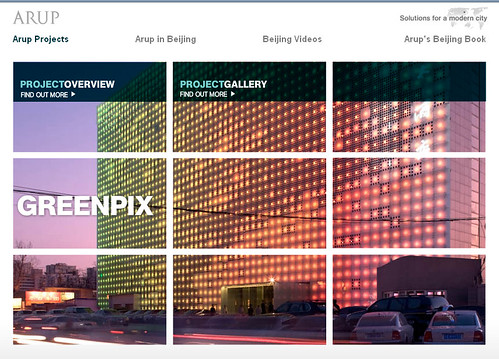
In West Beijing, the city's thriving artist community has a new and unusual 'canvas' on which to experiment: the GreenPix - Zero Energy Media Wall, which is the largest colour light-emitting diode (LED) light wall in the world.

The GreenPix - Zero Energy Media Wall is a major new focus for the digital artist community. The futuristic LED lighting system is capable of displaying moving images on a screen made up of 2,000 individually programmable LED colour nodes.

The 60 meter by 33 meter laminated glass facade is designed with artistic potential in mind. It offers media and digital artists an almost infinite range of possibilities, lending itself particularly well to artistic interpretation.

This virtuoso feat of engineering and lighting design is also a striking example of energy efficiency, with photovoltaic arrays on the building capturing twice as much energy from the sun than the lighting facade consumes.

Like any new structure in Beijing, the facade has been engineered to comply with Beijing's seismic regulations, and is entirely self-supporting.

The Chinese contemporary art scene has experienced a major expansion in recent years, with many artists now competing in the international contemporary art commercial market. With significant Chinese art exhibitions taking place in Europe during 2008, Beijing has developed as a centre for world-class art.

The GreenPix - Zero Energy Media Wall will galvanise an energetic artistic community and produce a valued, ever-changing public work of art that becomes part of the everyday lives of residents.

-----

Further reading (with images & videos) -

Official website of Greenpix - http://www.greenpix.org/
Overview of Greenpix in Arup Beijing Projects web - http://www.arupinbeijing.com/arup_projects/green_pix/overview
Flickr pool of Greenpix - http://www.flickr.com/search/?ss=2&ct=5&w=all&q=greenpix&m=text
Youtube pool of Greenpix - http://www.youtube.com/results?search_query=greenpix&search_type=

Friday, 1 August 2008

The next generation urban park - The High Line in New York

With more and more people in the world living in cities, how could we create a new type of sustainable urban environment that not only demolish old buildings and dissect neighbourhoods for new construction?

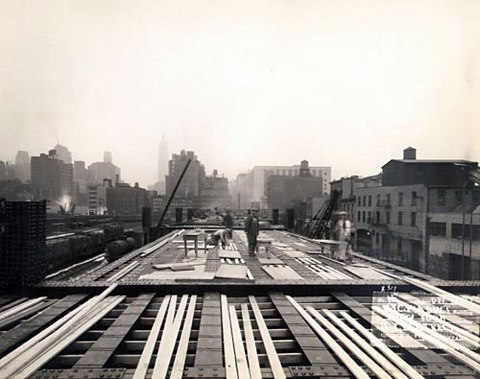
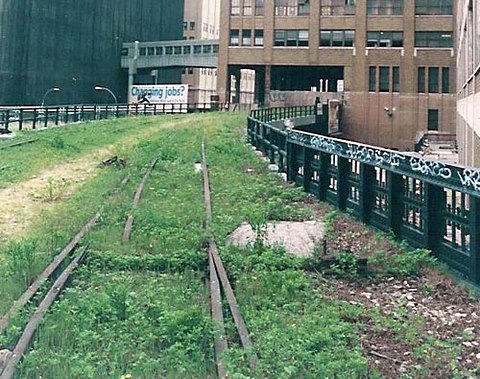
There may be an answer laid in the High Line in New York. It is an elevated rail network on bridges spanning 22 blocks and 1.45 miles long through three of Manhattan's most dynamic neighborhoods: Hell's Kitchen/Hudson Yards, West Chelsea, and the Gansevoort Market Historic District. The railway line was used to transport goods from one side of the city to the other without disturbing street level traffic but was gradually declined after the 1950s.

the high line

Since the mid 1980s, a group of private property owners who purchased land under the High Line at prices that reflected its easement have lobbied for demolition of the entire structure. Much credit for the fact that the High Line survived the demolition efforts in the mid- and late 1980s goes to Peter Obletz, a Chelsea resident, activist, and railroad enthusiast, who challenged demolition efforts in court and tried to reestablish rail service on the Line. In 1999 Friends of the High Line (FHL) was founded by Joshua David and Robert Hammond to advocate for the High Line's preservation and reuse as public open space.

the high line

A design competition was hold in 2003. The final proposal to be constructed is being designed by Field Operations (landscape architects) and Diller Scofidio + Renfro (architects). It would create a fabulous stripe of public open space travelling through building blocks at an elevated level in a scale never realised before in the world. Such dynamic creation would inject much vibrancy in the local life of the neighbourhoods, liven up streets and bring another green dimension to the city.

the high line

Below is a 6 minute documentary made by the Friends of the High Line offering an overview of High Line, its history, the movement to save it, and designs for its reuse. Directed and produced by John Zieman -


Finally there is something which makes me really want to visit New York. Looking back to Hongkong, while we have 2 gigantic vacant plots next to the harbour - the West Kowloon and the Kai Tak, have we ever thought about how we could plan these spaces so that they would become a generator for the surrounding neighbourhoods as well? And for other urban regeneration projects, being overseen by the Urban Renewal Authority, who has the vision to not just focus on separate plots but to create strategic linkages across the neighbourhood like the Central-Mid-Levels Escalator to bring in another dimension to the city fabric?

Even for the proclaimed success of the Central-Mid-Levels Escalator, is there anybody living in the area thinking on further evolution of the escalator? Perhaps we could have a Central-Mid-Levels Escalator 2.0, which could be either introducing green spaces on top / bottom of the existing escalator, or onstructing green skywalks similar to the High Line connecting the various levels of life?

Or look at the pedestrain footbridge networks we have around Central and Wanchai. Could the government actually co-operate with the developers of nearby commercial buildings to refurbish them and integrate green features and plants fully with the footbridge so we could have some fluid park spaces across the city where everybody could have a rest or enjoy their commute? This additional density of green would not cause any negative impact on the existing infrastructure, but instead further enhance the cityscape.

Further reading -

official website - http://www.thehighline.org
photo gallery - http://www.flickr.com/photos/friendsofthehighline
design competition entries - http://www.thehighline.org/competition
similar projects around the world - http://www.thehighline.org/about/similarprojects.html
central-mid-levels escalator - http://en.wikipedia.org/wiki/Central-Mid-Levels_escalators

Tuesday, 27 May 2008

Water lily plan for solar power on River Clyde in Glasgow

consolidated from www.inhabitat.com & BBC news

solar lily . 01

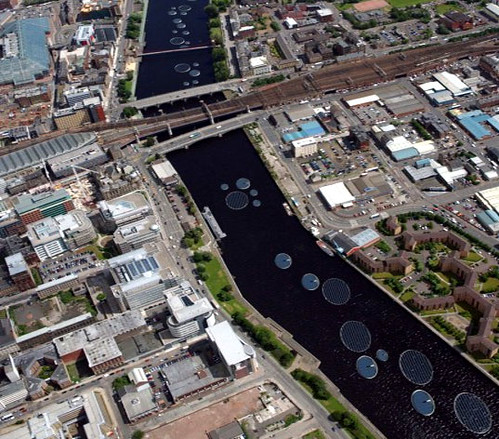
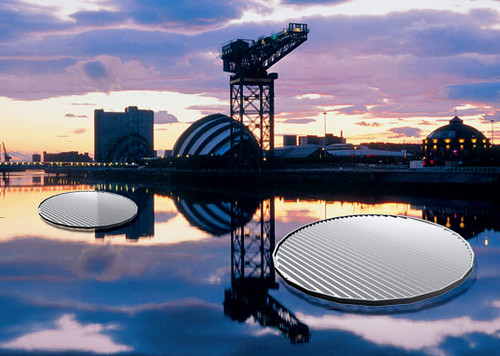
Large lily-shaped discs which harness solar power could soon be seen floating on the River Clyde. The concept, from Glasgow-based ZM Architecture, has been handed to the city council with the hope that a trial project could go-ahead.

The proposal has already won the firm the International Design Awards (IDA) Land and Sea Competition. Judges were impressed by the idea that energy harnessed on a river could help reduce a city's carbon footprint.

In the IDA project description, ZM Architecture said its project proposed to stimulate river activity and change by using the surface to harness solar power on a large scale. The energy created would then be transformed and exported to the national grid.

The firm said the design of the lilypads was "inspired by nature" and they could be tethered to the river bed. Integrated motors would then rotate the discs to follow the sun for maximum output. ZM Architecture director, Peter Richardson, said: "We are delighted to be recognised for our commitment to providing alternative energy solutions and are excited about the potential of this idea in a range of contexts."

The company hopes Glasgow City Council will be interested in developing a small pilot project in conjunction with the Science Centre.

solar lily . 02

-----

Further reading -
http://www.inhabitat.com/2008/05/12/solar-lily-pads-planned-for-glasgows-clyde-river/

Tuesday, 22 April 2008

22.04 Earth Day


Today is Earth Day. Let's take a look to see how people are leading a sustainable life -

Japan - "Towels Woven by the Wind" from PingMag MAKE


An ecological product, the organic cotton towels woven using electricity made from windmills. The organic cotton is grown just like organic vegetables.

America - "Edible Estates" from Garden Lab


Architect & artist Fritz Haeg has decided to turn un-ecological front yard lawns in people's houses to crop-growing fields. Report from New York Times TMagazine

Further reading -
Earth Day - wikipedia
Blogs about Earth Day 2008

Sunday, 20 April 2008

Yahoo! 綠生活 green life

Browsing news in yahoo taiwan website, and found a little link called 減碳風 on the top menu bar.

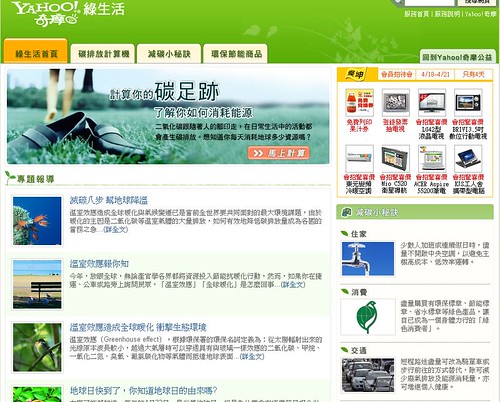
After I clicked into it, the link turned out to be a dedicated page about sustainable lifestyle -

yahoo 綠生活

It's very informative yet not too lengthy on each topic to keep readers not to go away. From the existence of such a mini-portal on sustainable life, it's clear that the public in taiwan (or at least the web population) has already realised the importance of this to our future generations.

On the contrary, no such portal is found in Yahoo! Hongkong web - what a shame!

Thursday, 17 April 2008

sustainable architecture 01 . villa nurbs

villa nurbs

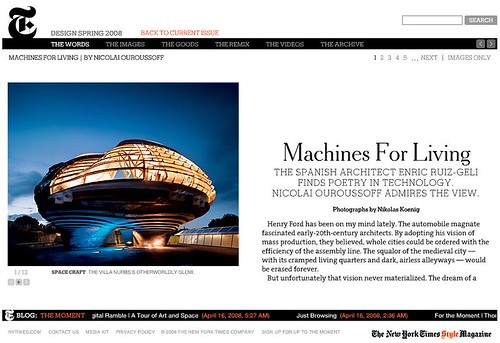
Come across this house by spanish architect Enric Ruiz-Geli from TMagazine in weekend IHT. The architect's website has more photos and drawings on the project.

Sunday, 16 March 2008

how to run a green restaurant


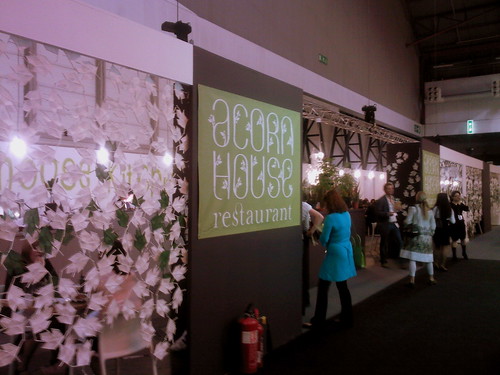
Acorn House Restaurant features in 100% Design Show

首間環保海鮮餐廳上菜 響應WWF指引 以「環保海鮮」材料入餚

明報 2008年3月16日

【明報專訊】世界自然基金會(WWF)去年為保護海洋生態而推出的「海鮮選擇指引」,終獲首間餐廳響應。該餐廳目前推出7款選用「環保海鮮」為材料的菜式,並取消包括藍鰭吞拿等名菜。WWF承認,要食肆跟隨指引不是「開燈熄燈」般容易,但這個例子證明並非不可能,故會繼續向更多食肆推廣。

每款菜式售228至428元

成為首間跟隨「海鮮選擇指引」的是位於中環太子大廈的高級餐廳Dot Cod Seafood Restaurant & Oyster Bar,該餐廳市務及項目經理Wendy表示,該餐廳由去年10月開始籌備跟隨指引,包括要求海鮮供應商確保食物來自以環保方法飼養或捕撈的類別,並設計相應餐單。目前,該餐廳共有7款屬環保海鮮的菜式,包括來自阿拉斯加的三文魚、北美的銀鱈魚等,預計本月底再增加3款,每款菜式售228至428元不等。

北美銀鱈魚 曾一天售80碟

該餐廳的新菜式推出以來反應不俗,目前有近半數顧客食用,更曾在一天內售出80碟北美捕撈銀鱈魚製作的菜式。她說,已向WWF表明無法即時完全跟隨指引,但會逐漸跟隨,早前已將金獅魚、藍鰭吞拿魚及紅斑等3款被列為「避免食用」的海鮮剔走。她坦言,這些是餐廳的「招牌菜」之一,「不時仍有顧客會查問」,目前餐牌上並沒有指引中建議「避免食用」的海鮮提供。

WWF於去年3月推出有關指引,將60多款海鮮,按其現有數目、飼養或捕撈方法等,分成「建議」、「想清楚」及「避免」3個食用類別。

推出一年 首間響應

對於指引推出近1年才有首間食肆響應,WWF高級環境保護主任 (海洋環保)朱炳盛承認,要食肆改變並不容易,但證明並非不可行。他說,建議食用的海鮮無論在價錢及味道上,與避免食用的海鮮並沒太大差別,只是食肆習慣了以往的做法,不願意改變,該會將繼續向不同的中西式食肆推廣。

________________________________________________

today's green lime - see how acorn house restaurant in london practise eco-friendly dining http://www.acornhouserestaurant.com/

Monday, 25 February 2008

'wasted' management

家居廢物收費 2010年前難實行
extracted from 明報 . 26.02.2008

【明報專訊】政府的減廢大計嚴重延誤,環保署長王倩儀承認,本港家居廢物難以按量收費,今年中開始會進行12至18個月的大型基線調查,完成後進行公眾諮詢,暫未能訂下落實推行收費的時間表。換言之,家居廢物收費不會在2010年前實行。

「按量收費」失敗而回

對於政府明確指出,本港首個焚化爐將於2014年投入服務,地球之友及立法會議員蔡素玉均批評,未做好源頭分類便焚燒廢物,只會浪費大量有用資源,是減廢政策的大倒退。

王倩儀昨出席立法會環境事務委員會,交代去年完成的家居廢物按量收費試驗計劃,結果顯示追查每戶生產廢物的源頭有困難,因此難以執行按量收費。

政府將於今年下半年重新展開一項基線調查,為期12至18個月,研究以劃一或定額方式徵費,初步構思以水費或差餉單評估每戶產生的廢物量及收費水平。她說,新加坡目前亦是以劃一方式收費,台北最初亦是以該方式收費,到市民適應後,才轉為按量收費。

議員批評減廢政策倒退

環境局長邱騰華強調,政府沒有忽略源頭減廢工作,強調徵費方式必須切實可行,試驗結果既顯示難以按量收費,因此要重新研究。他又指落實興建焚化爐需時,目前提出是合適時間。民建聯蔡素玉批評政府的減廢政策大倒退,認為以焚化爐「一燒了之」不能解決問題,民主黨李柱銘批評政府議而不決,推行收費無期。

政府早前公布,新一代焚化爐將於2014年運作,議員普遍關注選址對周圍環境及居民的影響。民建聯劉江華形容,本港擬興建的焚化爐「萬佛朝宗」,容量高達 3000公噸,與日本分散在各區的小型焚化爐不同,而該區亦有其他大型設施如電廠及堆填區等,擔心影響香港的空氣質素。環保署回應稱,目前科技可以將焚化過程產生的致癌物二噁英維持在極低水平,遠低於歐盟標準,不會對周圍居民有任何影響。

焚化爐計劃亦引起財團注意,青洲英坭執行董事莊善敦昨日親自到立法會旁聽,會後透露今日與環保署代表會面,建議採用該集團的「環保廢物融化系統」,將焚化爐設於英坭廠內,毋須額外撥出土地,較其他選址更環保及具成本效益。

-----

today's green lime -
SMIT's GROW: Solar and Wind Leaf Photovoltaic Shingles
http://www.inhabitat.com/2008/03/01/smits-grow2-project-new-solar-and-wind-solutions/

Wednesday, 20 February 2008

Green Investment Strategy

Are you investing in firms that are killing the earth?
by Timothy Barber
(from City A.M. newspaper, London 19/02/2008)


ENVIRONMENTALIST Al Gore didn’t mince his words last week when he warned a meeting of Wall Street leaders and institutional investors at the United Nations about the dangers of investing in carbon-intensive businesses.

“The assumption that you can safely invest in assets that come from business models that assume carbon is free is an assumption that is about to go splat,” the former US presidential candidate said.

He compared companies attempting to to drug addicts injecting into their toes having run out of veins in their arms, and told those assembled: “I guarantee that if you really take a fine-tooth comb and go through your portfolios, many of you are going to find them chock-full of ‘subprime’ carbon assets.”

Comparing the tribulations of the energy industry to the mortgage calamities of last year is perhaps as big a stick as any for the Nobel prize-winner to have shaken, and the battle surrounding energy markets in the era of climate change is only set to get fiercer. Last week James Mulva, chairman of energy corporation ConocoPhillips, told the annual meeting of the Cambridge Energy Research Associates in Houston, Texas, that the debate over climate change was slipping away from the energy industry.

REVOLUTIONISE SOCIETY

“The train is leaving the station without the industry on board,” he warned. Uncertainty over the risks that climate change represents stretches far beyond the energy industry, with rising energy costs playing a major role. Increasingly in recent years, investors have been seeking assurances that corporations have clear, defined strategies for dealing with carbon emissions and the risks associated with growing carbon taxes and regulations.

“Climate change is going to completely revolutionise the way human society produces and consumes energy,” says Paul Dickinson, chief executive of the Londonbased Carbon Disclosure Project (CDP). “That has massive fiscal implications for almost every company, and investors will be looking to sort the wheat from the chaff.”

The Carbon Disclosure Project was set up in 2000 as a way of addressing the potential commercial impact of climate change on shareholder value and commercial strategy.

DISCLOSE EMISSIONS

Its signatory members are made up of 385 institutional investors, including such major players as Merrill Lynch, Barclays, HSBC, AXA and AIG, with collective assets under management estimated at $57trn (£29trn).

Annually since 2002, the project has asked companies to measure and disclose their greenhouse gas emissions and report on their strategy for dealing with the risks and opportunities associated with climate change. The information supplied is displayed publicly on the CDP website, and the responses from the world’s 500 largest corporations are analysed in the organisation’s annual FT500 report.

For investors, it can prove crucial in assessing the risks and opportunities posed to the companies by climate change, and offers a more reliable, centralised resource than institutions were previously able to access. “We are concerned to know whether companies we are investing in are adequately taking account of climaterelated risks,” said Joachim Faber, board member responsible for asset management at Allianz. “However, the data is often not available, sometimes not comparable or of poor quality.

“As a part of the Carbon Disclosure Project, we hope to collect more reliable data, so eventually a common emissions measurement methodology can be developed.”

CALL FOR INFORMATION

The increasing importance of the information CDP gathers can be gleaned from the fact that in 2002 the collective assets under management of participating investment institutions was just $4trn. This year it has leapt by more than 30 per cent from 2007’s total of $41trn, with more than 70 new investors joining the fray.

Meanwhile, the call for information has this month gone out to 3,000 companies globally — including the entire FTSE 100 and FTSE 350 — compared to 2,400 last year. With signatory investors readily identifying which companies in their portfolio are either not responding to the request or providing unsatisfactory answers, it is arguable that companies failing to engage with the process put themselves in increased commercial danger.

“These are funds that could potentially be withdrawn from companies that look like they’re going to lose money because of climate change,” says CDP’s Dickinson. “The carbon price is rising, and things are going to change on a ratchet. We can now really see the signs of that: industry is in a fierce debate with government about energy prices and tough decisions are going to be made about how we invest for the only future that’s possible.” The signs are positive.

Between 2006 and 2007 response rates among FTSE 350 companies increased from 49 per cent to 70 per cent, while 92 of the FTSE 100 firms responded last time.

FALLING SHORT

The information companies are asked to provide to CDP can sometimes be revealing in unexpected ways. For example, US grocery giant Wal- Mart was surprised to discover that carbon emissions caused by its haulage fleets were rather less than those caused by its refrigerators. This led to the company extending the carbon self-audit to its supply chain, an initiative that has now been joined by several other major corporations under the banner of the CDP Supply Chain Leadership Collaboration.

Currently being piloted, the scheme will be rolled out in May this year, meaning the climate change concerns of the world’s largest investors and corporations will begin to reach even deeper into business infrastructures.

“Climate change is very, very serious, and the political process is falling short,” says Dickinson. “So the corporate communities have to have look at each other and think: ‘are we going to allow this car crash to happen, or are we going to do something about it?’”

For investors, the results are now increasingly visible.

today's fresh lime -

Find out what your carbon footprint is and how you could reduce it by some small changes to the way you live in this CO2 calculator -
http://actonco2.direct.gov.uk/index.html

Saturday, 16 February 2008

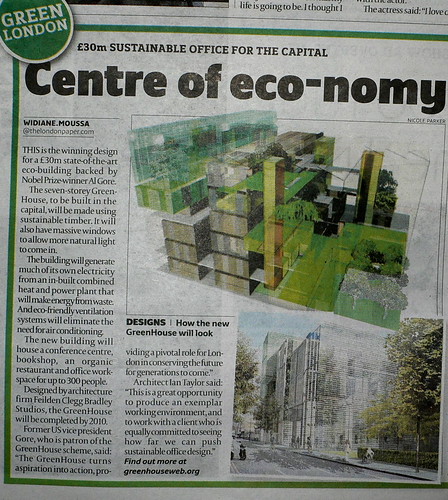
green house by FCB architects

green house
Click the above image to read the article

Greenhouse is a pilot project for sustainable construction in London.

To know more, visit its official web at http://www.greenhouseweb.org/

Monday, 11 February 2008

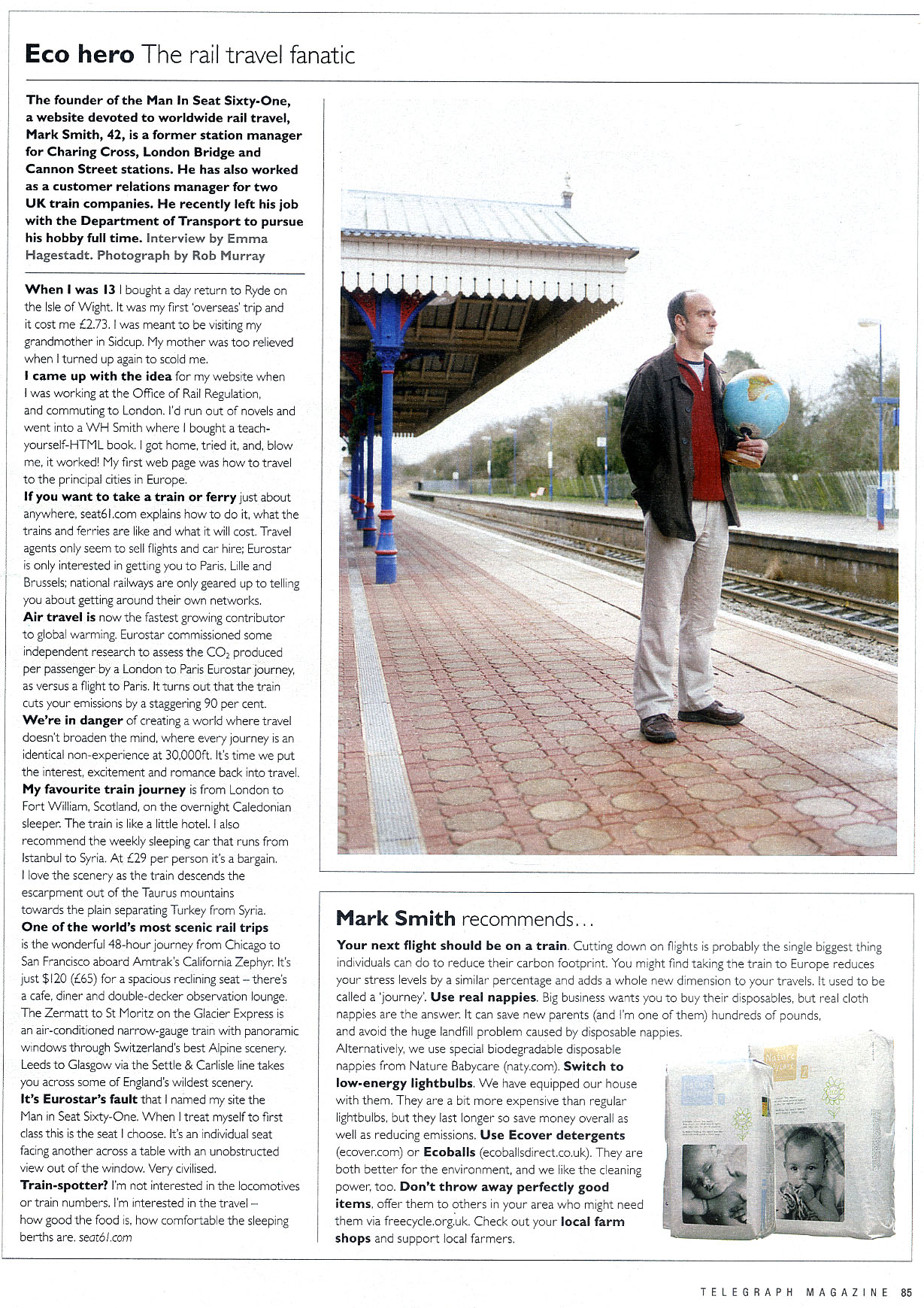
the man in seat 61

interview with Mark Smith
Click on the above image to view the article

I came across this website from this week's Telegraph magazine. It is created by an English man called Mark Smith, who loves travelling by train and thinks everyone should recall the lost memories of rail & sea travel. Originally he just did it for fun, but it's getting so well that he even won several travel industry awards and gave up his job to focus into the website now.

So next time when you want to go somewhere for holiday, think about the travelling to & from the destination could also be an enjoyable part of your holiday and become the journey of its own with the help of Mark's wonderful website! And you may not realise, if you goto paris from london by eurostar, your carbon footprint is 90% less than flying on plane...

Tuesday, 29 January 2008

photosynthesis for energy

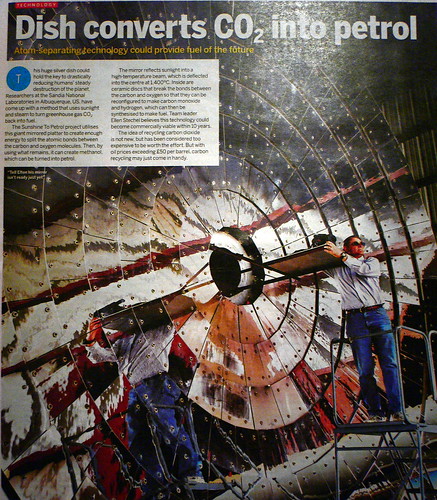
dish converts CO2 into petrol
from shortlist magazine . 17.01.2008
click to enlarge for text

Scientists at Sandia National Lab USA had made progress attempting to generate energy for consumption from sun light - something like photosynthesis for plants to make its food.

more info @ http://www.sandia.gov/news/resources/releases/2007/sunshine.html

driven by breezes


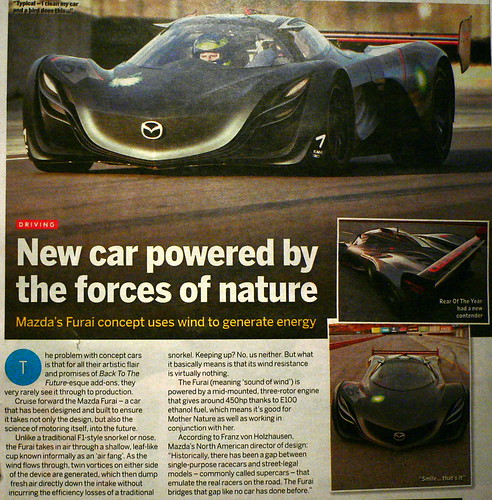
the wind-powered car - mazda furai

mazda furai
click the above article to enlarge & read (extracted from shortlist magazine, london, 17.01.2008)

more info @ http://www.autoblog.com/2007/12/27/mazda-furai-breaks-cover/

Monday, 28 January 2008

Air Tree @ Madrid

 
air tree, solar energy product, madrid green design, madrid eco trees, madrid air trees, madrid energy, solar energy, solar power, urban solar plans

The city of Madrid soon plans to add a striking new structure that will “climatically transform” its urban architecture. Designed by Urban Ecosystems, the Air Tree pavilion is to be built from recycled materials and will be 100% energy self-sufficient. Using photovoltaic cells, the Air Tree produces a substantial amount of energy, which is then sold back to the local electric companies, the profits being used for maintenance of the structure. The second byproduct is of course oxygen - hence the name ‘Air Tree’!

 More from: http://www.inhabitat.com/2008/01/24/stunning-air-trees-only-byproducts-are-h2o-energy/#more-8095